
New York: Palace and Architecture
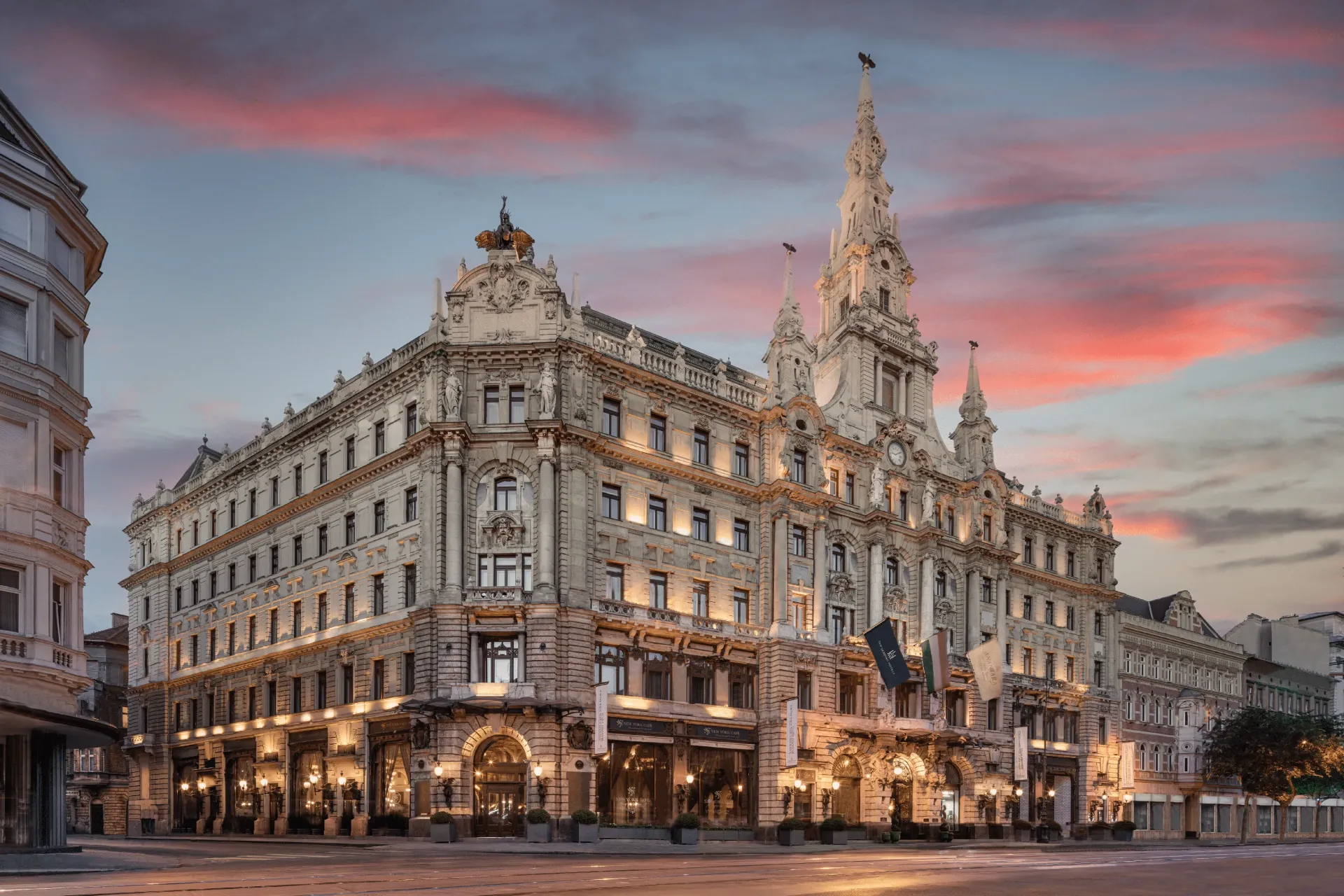
An eclectic palace on the Grand Boulevard, designed by Alajos Hauszmann. It was on the ground floor of the New York Palace that the café space was created which is today hailed as the most beautiful café in the world. Marble, gold, frescoes and fluted columns: the architecture of the New York Palace is not merely a backdrop, but the experience itself.
For over a hundred years, the café’s interior has been drawing visitors to the heart of Budapest.
The palace, built to be a sight to behold
The New York Palace was built between 1892 and 1894 on Budapest’s Grand Boulevard, in the area bounded by Erzsébet Boulevard, Dohány Street and Osváth Street. The four-storey, three-facade palace was built as the prestigious headquarters of the New York Life Insurance Company.
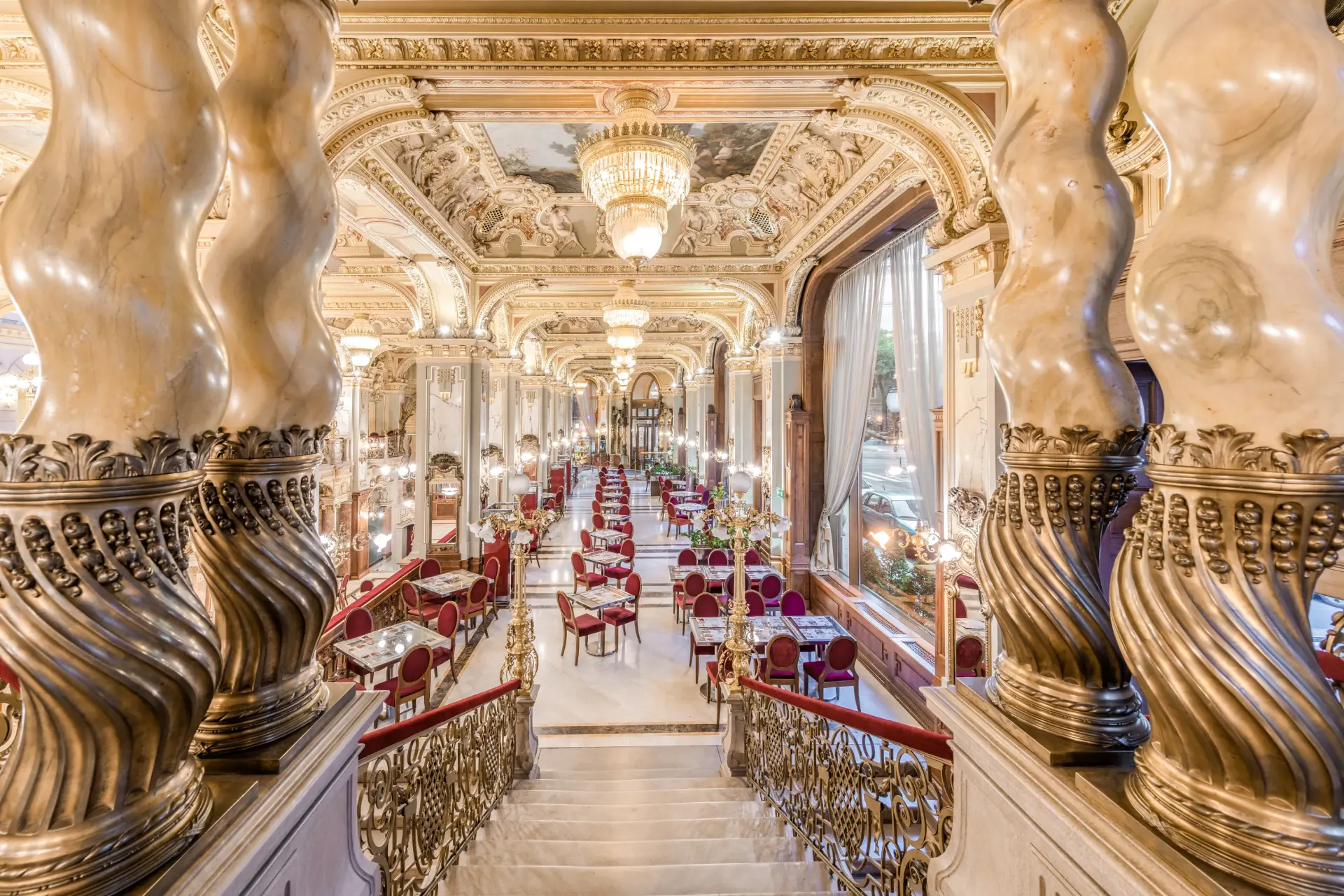
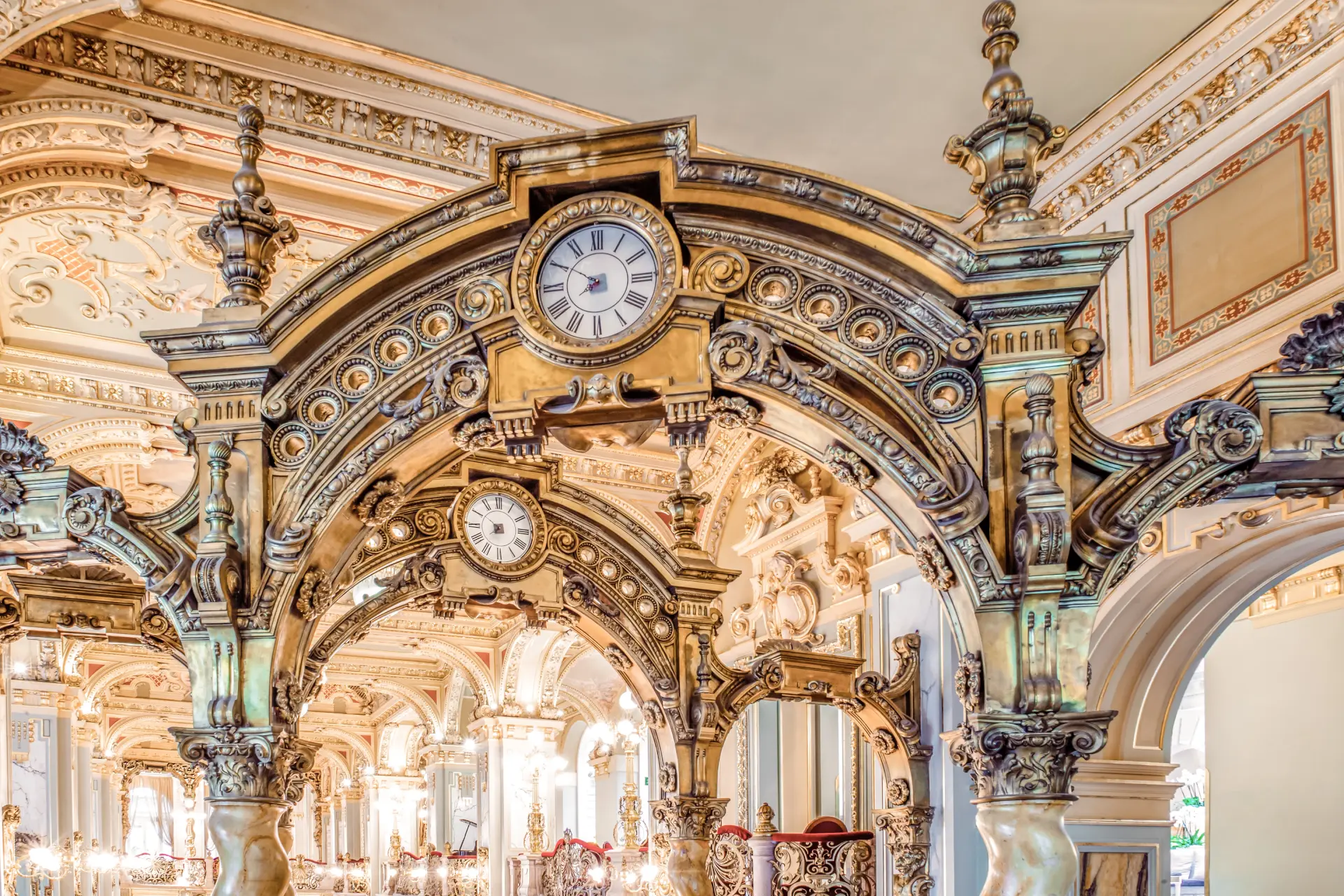
The café on the ground floor of the building was already a sight to behold when it first opened. The twisted marble columns, the frescoes, the Venetian chandeliers, the gilded details and the lavishly decorated rooms all combined to create that iconic spatial experience, which is why the New York Café remains one of Budapest’s most photographed historic interiors to this day.
The architects
The design competition was won by Alajos Hauszmann, with the collaboration of Flóris Korb and Kálmán Giergl. Hauszmann is recognised as one of the most important figures in Hungarian historicist architecture: among other things, he is associated with the reconstruction of the Buda Castle.
The construction work was carried out by József Pucher’s company, and some of the era’s leading craftsmen and manufacturers were also involved in the creation of the palace. The work of the Ganz, Schlick and Zsolnay factories also contributed to making the building one of the most imposing palaces in Budapest at the turn of the century.
Marble, light and gilded details
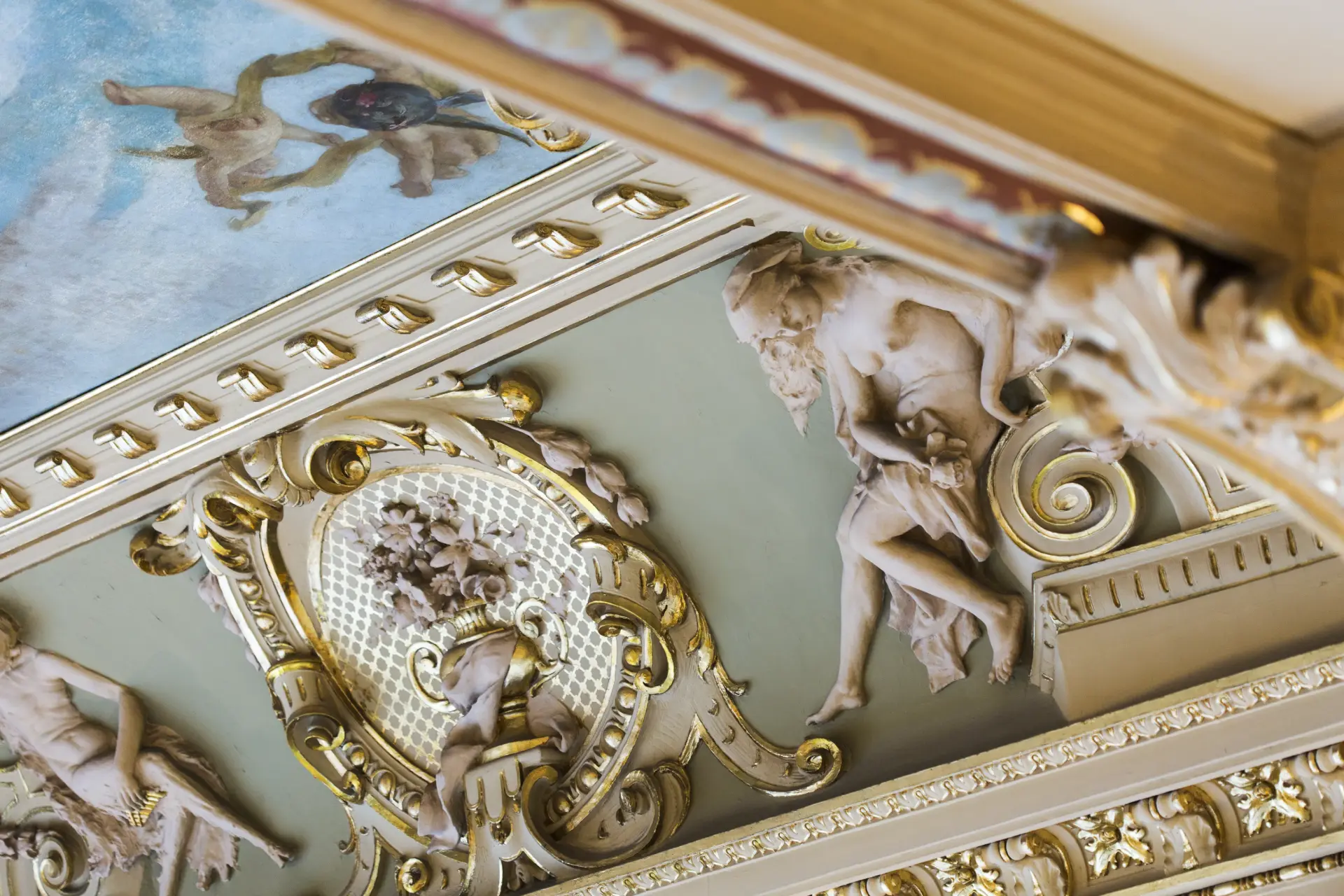
The interior of the New York Café was a stunning sight even at the time of its opening. The space is divided into several sections, separated by distinctive twisted marble columns. The gallery, the staircases, the fountain, the glow of the Venetian chandeliers and the richly decorated surfaces all combine to create an atmosphere that still often causes guests to pause for a few moments upon entering.
The silk and velvet tapestries, the mirrors, the gilded details and the Italian Renaissance-inspired ornamentation are not merely decorative. They are what create the New York Café’s iconic atmosphere: a setting that is at once historic, solemn and very much alive.
Ceiling paintings and artistic details
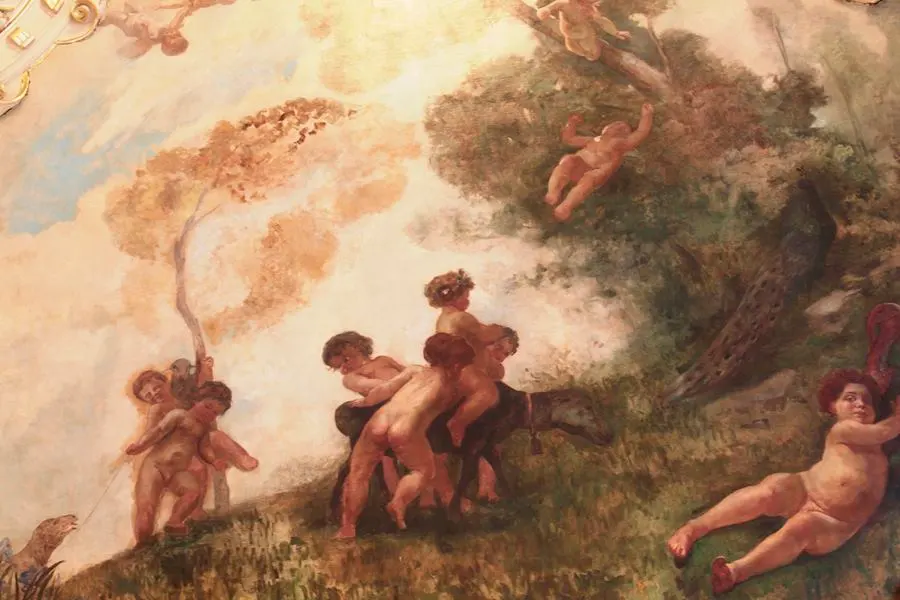
The ceiling panels were created by Károly Lotz, Gusztáv Magyar-Mannheimer and Ferenc Eisenhut. The frescoes and ceiling paintings mainly evoke the worlds of music, the visual arts and mythology: satyrs, nymphs, allegorical figures and scenes relating to the arts are depicted high above.
That is why, at the New York Café, not only the architecture but also the visual arts form part of the guest experience. Those who step inside are not simply entering a café, but a historic space where the ceiling, the columns, the lighting and the details all tell a story together.
The fourteen devils and
El Asmodáj
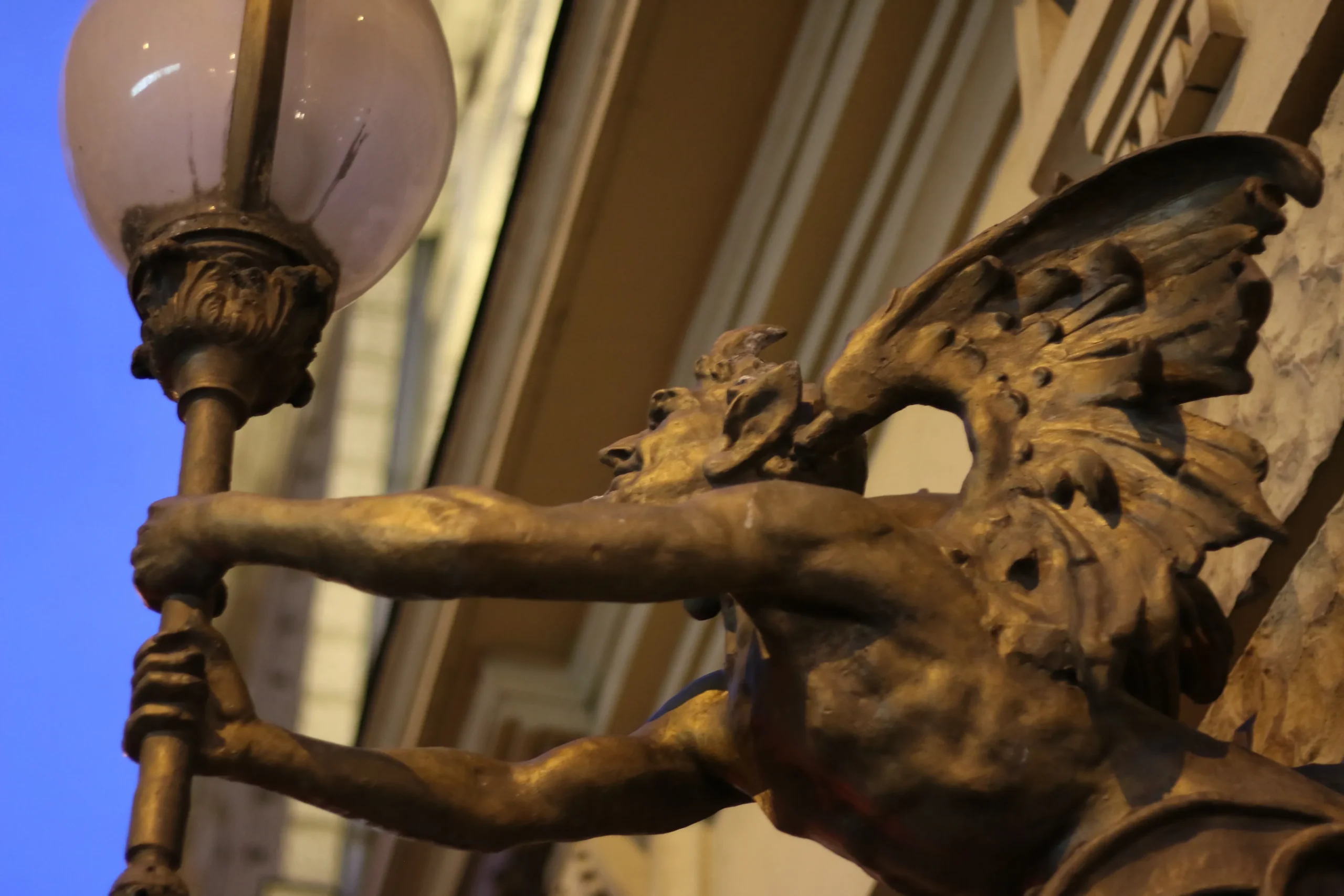
The most famous figures adorning the exterior of the palace are the fourteen bronze devil figures, the work of the sculptor Károly Senyei. These playful, faun-like figures hold lanterns and form one of the most distinctive features of the façade.
The best known of these is El Asmodáj, a figure often referred to as the spirit of coffee and contemplation. His presence fits in well with the world of the New York Café: a place where spectacle, thought, literature and social life have been intertwined for over 130 years.
Injuries and recovery
The New York Palace weathered the storms of the 20th century. During the siege of Budapest, both the building and the café area were damaged, and several decorative features required restoration.
The palace was purchased by the Italian Boscolo Group with the aim of turning it into a luxury hotel and restoring the New York Café to its former glory.
The aim of the 21st-century restoration was not merely to restore the palace to its former beauty. Through the restoration, Budapest has regained a historic space that is now at once an architectural landmark, a cultural heritage site and a functioning café and hotel experience.
What is worth looking out for during your visit?
At the New York Café, it is the details that give the experience its true depth. It’s worth looking up at the ceiling paintings, following the lines of the twisted marble columns, and taking in the gallery, the chandeliers, the gilded decorations and the bronze figures on the façade.
This building is not merely a backdrop to the café experience. The New York Palace is an integral part of it: the very space that makes guests not only arrive, but also look around, take photos, make memories, and often sum up their first impression with the very same phrase: “You’ve got to see this.”
FAQ
Frequently Asked Questions
The plans for the New York Palace were drawn up by Alajos Hauszmann, with the collaboration of Flóris Korb and Kálmán Giergl.
The palace was built between 1892 and 1894 on Budapest’s Grand Boulevard, in the area bounded by Erzsébet Boulevard, Dohány Street and Osváth Street.
The café’s iconic appearance is characterised by its twisted marble columns, galleries, ceiling frescoes, Venetian chandeliers, gilded details and richly decorated rooms.
El Asmodáj is one of the best-known figures on the façade of the New York Palace, often referred to as the spirit of coffee and contemplation. The figure is part of the façade decorations created by the sculptor Károly Senyei.