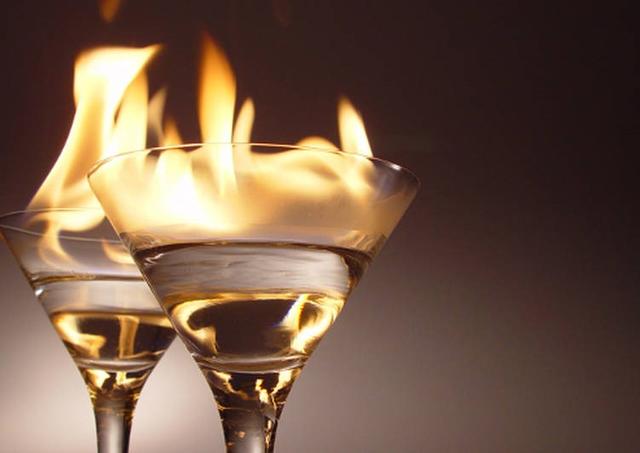
But where does the alcohol come from?
According to legend, there was a Persian king, namely Shah Jamshid, who was passionate about grapes. He amassed a huge quantity of them in his palace and, naturally, some of them were crushed and began to rot. The king deemed it poisonous and banished the entire stock to the cellar. The Shah had a concubine, Gulnáré, who one day was tormented by a terrible migraine. So much so that she would have preferred suicide to the excruciating headache. So she went down to the cellar, where she drank some of the liquid the king had labelled as poison. Our heroine did not die from it, but instead experienced a numbing, pleasant, warm sensation, and then, in a state of near-ecstasy, she began to dance before the king. Once they realised what had happened, the king set about producing the wine. In the Middle East, the wine is known as ‘zeher-i-kús’, which means ‘enchanting poison’.Legends of the Rooster’s Tail
Alcohol was already known in Babylon, Egypt and ancient Greece, and was typically used for religious purposes. As for how this came to be a cocktail, let a few legends – by no means an exhaustive account – tell the story for me. In the 18th century, cockfights were widespread. The cock that won was the one that killed its opponent, or the one that managed to retain the most torn tail feathers. At the end of the contest, the audience drank a toast: they mixed together as many different drinks as there were tail feathers left on the unfortunate, battered but victorious bird. This is where the name ‘cocktail’ comes from – meaning ‘cock’s tail’. In America, a pub-keeper’s daughter fell in love, but her father did not consent to the marriage. Shortly afterwards, the innkeeper’s fighting cock vanished without a trace. In his utter despair, the head of the family decided to offer his daughter’s hand in marriage to the honest finder, as the cock was worth more than his daughter. The lucky finder turned out to be the original suitor, so the wedding could finally go ahead. The delighted father poured out the pub’s entire stock of drink, much to the delight of the guests. The daughter of King Axolotl II of Mexico was called Coctel. In the 19th century, the young lady offered American officers visiting the court a special drink. The soldiers believed that ‘Coctel’ was the name of the drink they were consuming, rather than that of the princess; from then on, ‘cocktail’ came to be used as a synonym for flavourful, strong drinks.The initial mixes
The first recipe book was published in the 17th century by the Destiller’s Company, and in fact contained recipes for concoctions prepared for medicinal purposes. The first definition of a cocktail appeared in the magazine *Balance* in 1806, which described a cocktail as a stimulating mixture of spirits, sugar, water and bitters. The first collection of cocktails in the modern sense was published in 1862.The cocktail’s rise to popularity
Prohibition, between 1920 and 1933, gave a significant boost to the popularity of cocktails. The end products of illegal distillation were of poor quality and did not offer much enjoyment to those who consumed them. Other drinks were mixed in with them to make the taste of the alcohol more palatable. As the art of mixology first became widespread in the English-speaking world, English became the accepted technical terminology.
During the Prohibition era, many people fell in love with these concoctions, so it was clear that they would endure for future generations. Since then, cocktails have become much more refined. Of course, the aim of using numerous ingredients to mask the undrinkability of a particular component is now a thing of the past. These days – in the better, higher-quality establishments – fine spirits are used to create exclusive flavour combinations for guests.