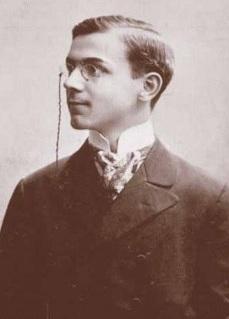
He was granted only 42 years of life, yet masterpieces emerged from his hands. He worked tirelessly and, although he too joined the ranks of the regulars at coffee houses – including, amongst others, the New York Café – idling was the furthest thing from his mind. He mainly worked and worked, and whatever he understood of the events unfolding around him, he rendered with astonishing artistry.
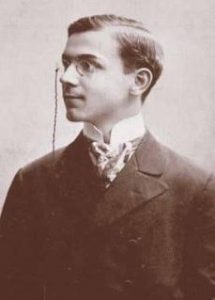
Árpád Tóth was the 20th-century Hungarian embodiment of the elegy, a sublime voice of sorrow, and the poet of grief. This sorrow, however, was expressed in a magnificent, musically resonant and meticulously polished form. He, too, belonged to the first generation of the great “Nyugat” movement.
He was born in Arad in 1886, a child of very frail constitution. He was three years old when he moved with his family to Debrecen, where he spent his childhood. He was an introverted young man who took refuge in literature and withdrew into it. After his school-leaving exams, he moved to Budapest and enrolled to study literature. He was a diligent and able student throughout his life, thirstily absorbing knowledge.
It was in Budapest that he encountered the new literary movements. By the age of nineteen, his poems were already appearing in the capital’s newspapers, including *A Hét*, edited by József Kiss, which, before *Nyugat*, had been the main hub of modern literature. Then, from 1908, when *Nyugat* was launched, he too became one of the magazine’s contributors. Although he looked up to Endre Ady with admiration, he was closer in spirit to the ‘philosopher-poets’, such as Babits and his circle, yet he differed from them in both his language and tone.
Although his family had previously been well-off, he had not even managed to complete his university studies when, in one fell swoop, they suffered financial ruin, and so he had to support his family. He gave up his plans to become a teacher and returned home to Debrecen. He became a journalist, as it was impossible to make a living from poetry. He continued to send poems from Debrecen to *Nyugat*, but at home he wrote political articles. He was forced to come to terms with public life, and was appalled by what he saw of the world.
In 1913, when his newspaper ceased publication, he returned to the capital, initially taking on work as a private tutor. He found it difficult to secure a position on an editorial board, but eventually Lajos Hatvany took him under his wing, just as he had done with so many great Hungarian poets, from Ady to Attila József.
By this time, he was already suffering from lung disease. The literary world recognised his talent, but also accepted that, due to tuberculosis, his life would be cut short. Every effort was made to prolong his life: he travelled from one mountainous region to another, and was even exempted from military service, thus escaping the First World War. He was also blessed with great love: he married in 1917.
With humanist fervour, he rejected all bloodshed. As the revolution drew nearer, his elegiac tone gave way to odes. He was a typically left-leaning, sentimental bourgeois intellectual who, out of moral convictions – or perhaps amidst utopian dreams – sided with revolutions that promised greater humanity. And when the revolution failed, he did not accept this with the continued hope of a discerning man, but sank into despair.
His final years were spent working tirelessly. He joined the editorial team at *Az Est*, where he excelled in every journalistic genre, from editorials and reviews to light-hearted news items. He was a hard-working, conscientious and versatile journalist. By this time he was able to make a living, but he simply did not have enough time left to live his life.
Árpád Tóth is one of our greatest literary translators: he covered a wide spectrum of world poetry, enriching our cultural heritage with magnificent, meticulous and astonishingly faithful translations. He was also a meticulous stylist in prose. His rare short stories, his careful and insightful critiques, his colourful articles that bordered on poetry, and the bulk of his journalistic work worthily complemented his poetic oeuvre.
Illness took his life at the age of 42. Mihály Babits delivered the eulogy at his grave.
The following story best illustrates what sort of man Árpád Tóth was:
From time to time, even the quiet, reserved Árpád Tóth would let his pure sense of humour shine through. It was no wonder that Jenő ‘Józsi’ Tersánszky enjoyed joking with him… “We were sitting together one day in the gallery at the New York Theatre. And I said to him: ‘Listen, Árpád Tóth. It reminds me of my teacher, who once saw you out at the station, and that poor old grandad of mine, who’s a ticket inspector in Parád. This is a poem by Karinthy, from the collection *This Is How You Write!…*, about Tóth. Árpád Tóth smiled at this and said: ‘You see, Józsi Jenő, that’s my good fortune. People will come to know the parodies of my poems before they know my poems themselves. In fact, they might not know my poems at all. So I must be grateful even for the mockery. That was Árpád Tóth. Other people feel nothing but anger at the wrongs done to them by others. Árpád Tóth’s way of thinking was such that he would immediately ask himself, ‘Could I perhaps be grateful even for the hurt I’ve suffered?’”