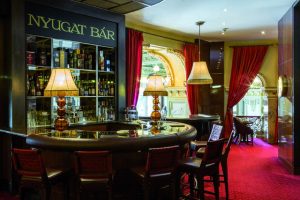
Sometimes we make room for dessert. When we dine at a restaurant where we know for certain that we’ll be served the very best of everything, we sometimes feel we simply must eat less of the main courses so that we can fully savour the splendour of the desserts. We certainly won’t go wrong if we make that decision at the New York Café.
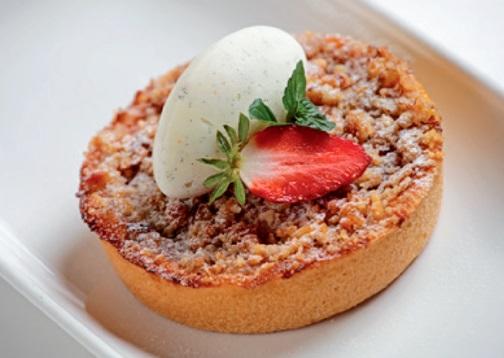
The menu, featuring a range of beautiful dishes, also includes some of the most delicious desserts, which are hugely popular here at home. The sight of apple pie, Rákóczi cottage cheese cake, Sacher cake, chocolate cake and cheesecake is guaranteed to break even the strongest resistance, and anyone who indulges in these desserts will not regret it in the slightest.
Some of these desserts are internationally renowned, having become established in one form or another all over the world. But where do these divine delicacies actually come from?
Although many people know apple pie as „apple pie” and regard it as as fundamental a part of American food culture as, say, the hamburger, apple pie did not originate across the pond. It is much closer to home. In fact, apple pie is a British invention; it was the British who first experimented with sweet pies. The first such pastry was the pumpkin pie, which was even recorded in writing in a cookbook dating from 1675. It was also a Briton, Robert Greene, who first wrote about apple pie – in verse, no less. During the colonial era, apples featured in almost every sweet treat in America, whether in the form of English pudding, pie or simply baked apples.
Incidentally, pies were originally made with savoury, meaty fillings and were already being baked in the Middle Ages; thus, the original apple pie is English, whilst any subsequent variations may well be American inventions.
Contrary to popular belief, the cake has nothing to do with Prince Ferenc Rákóczi II. The dessert is actually named after the master confectioner János Rákóczi. After completing his studies in Hungary, he worked in Paris; upon his return, he became head chef at the Palotaszálló in Lillafüred, then at the Gellért Hotel, and from 1953 until his retirement he was head chef at the Duna Hotel. He published several cookery books and received numerous professional awards. The recipe for the cottage cheese dessert he invented first appeared in 1937 in a trade journal for chefs. The dessert also featured prominently at the 1958 World’s Fair in Brussels. The base of the cake is a flaky pastry sheet that can be rolled out easily, topped with a quark cream flavoured with lemon zest, vanilla and raisins. It is covered with a light, sugared egg-white meringue and decorated with apricot jam.
This dessert, which has since become world-famous, was created in 1832 by the Viennese confectioner Franz Sacher at the request of Prince Metternich. Sacher was 16 years old at the time, and the cake has remained one of Vienna’s most popular desserts ever since. The recipe was perfected by his son, Eduard Sacher. The original cake consisted of two layers of dense, not-too-sweet chocolate sponge, with a thin layer of apricot jam in between. The top and sides were covered in dark chocolate. The Sacher recipe marketed today as the most authentic – which can be sampled at the Hotel Sacher in Vienna – differs in many respects from the original 19th-century recipes. In many places, apricot jam is now mixed into the raw sponge mixture; the cakes are cut in half and filled with heated jam, and the top is also coated with it.
The basis for all these cakes was invented by Alexander the Great, the conqueror. Historical records bear witness to the fact that Alexander of Macedon organised the greatest wedding celebration in recorded history in the Persian city of Susa. Ten thousand Macedonian men were persuaded, on the king’s orders, to marry a Persian woman each; thus, ten thousand maidens and widows became the brides of the Macedonian army. Alexander was resourceful in almost everything; indeed, he loved to spring surprises.
In ancient times, soldiers received a daily food ration consisting of a loaf of bread weighing approximately 60 dkg. The bread was flat and round, about the size of an average cake today. It was baked from coarsely ground barley, rye or wheat. On the day of the wedding in Szúza, however, the ‘cake’ was made from a honey-based dough containing grains, almonds, walnuts and pieces of dried fruit; it was cut in half and filled with a cream made from aniseed, goat’s cheese and honey. The top was decorated with rose petals dipped in honey, and magical symbols were arranged on it using white blanched almonds.
No one has come up with anything better since the time of Alexander the Great. Even today, the cake consists of a sweet mixed dough, cream, icing and a decorative topping.
And since we began with a cake thought to be American in origin, let us conclude with a sweet treat also believed to have American origins. According to historical records, cheesecake was already hugely popular in the ancient Greek world. A written record dating from 770 BC has been found which attests that a dessert very similar to today’s version was served to the Olympic athletes. A recipe entitled ‘The Art of Making Cheesecake’ has even survived.
There are numerous European, Latin American, Asian and, of course, American variations of cheesecake. The basic recipe underwent numerous changes over the centuries before, in the first half of the 20th century, thanks to James Kraft, cream cheese was developed, which remains one of the key ingredients in cheesecake desserts to this day.
Cheesecake can be made either baked or no-bake. It is decorated or filled in different ways depending on the culture and country. This is how ricotta and mascarpone cheesecakes came to be in Italy, and chocolate cheesecakes in Belgium; but regardless of national borders, the New York cheesecake is one of the true classics – richer and creamier than the Philadelphia version, which is, however, generally lighter and more delicate. It can contain any kind of filling, but the essence always remains the same: a thin sponge, Linzer or biscuit base, topped with a soft, silky cream.