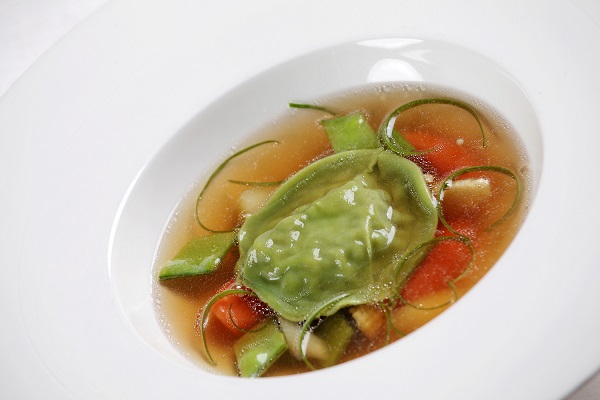
Soup is an essential part of a healthy lifestyle. It’s filling and nourishing, and if we delve into the vast array of soup recipes, we can find something to suit our taste every day. It can go a long way towards helping us stay in shape if we know how to make one of our most varied dishes lower in calories, whilst keeping it just as delicious and filling.
When it comes to soup, Hungary is to soup what Italy is to ice cream. It isn’t our invention, yet we’ve perfected it and made it incredibly varied. If we look at the range of soups on offer in different countries – just as we do on restaurant menus – we’ll find very little variety; by comparison, Hungary is considered a „soup superpower”.
Genuinely low-calorie soups
There are some warm, tasty dishes that we can enjoy without having to worry about the calories. These are clear broths – that is, those that contain no thickening agents. These broths, which can be made from almost any meat and bones, can be enriched with plenty of vegetables and herbs. Their greatness lies in the fact that they are cooked for a long time over a low heat; during this time, a wealth of flavour is extracted from the meat and bones, giving the soup its concentrated flavour.
The queen of meat broths is consommé. This soup is perfectly clear; to achieve this, it is clarified, meaning that everything – even the tiniest floating particles – is removed from it.
Hearty dishes: more filling soups
Hungarian cuisine is extremely inventive when it comes to thickening, which makes our dishes more substantial. One such thickening method is a roux, where flour is browned in some form of fat and then stirred into our soup. A lighter version is a milk roux, where flour is mixed with milk, sour cream, cream, yoghurt or kefir, and this mixture is poured into the soup. It’s worth being careful with these if we’re trying to watch our weight, as their fat and carbohydrate content won’t exactly help our diet. Of course, if you’re really craving a hearty bean soup, whether it’s thickened or not makes little difference. If you eat thickened soups as a single course and don’t eat anything else afterwards, there’s still hope.
A creamy treat
If we’re not keen on whole vegetables and fruit, but we do like their flavour, this is one of the best ways to prepare them. We can purée or blend the ingredients, and these can be any vegetables or fruit. If you don’t use too much flour or cream when thickening, or if you use alternative thickening agents such as rice flour, graham flour or starch, you can significantly reduce the calorie content of the soup. In many cases, you can even leave out the thickening agents altogether; even without them, you can still achieve dishes with a pleasant texture that are both tasty and gentle on the stomach.
Soups with noodles
We don’t eat these primarily for their broth, but because we use a generous and varied selection of ingredients. Taken together, these ingredients create the harmony of flavours we expect from a thick soup. In addition to the basic ingredients, we can make our dish even more substantial with countless types of soup garnishes: additions made from meat or offal, such as liver dumplings; kneaded and mixed doughs, such as gnocchi; or even various grains, such as bulgur.
Stew soups are not meant as starters; we need to make room for them in our stomachs and allow time to digest them properly. These soups are often enriched with sour cream or cream, which is why ladies who are conscious of their figures should not eat them too often; of course, one can indulge from time to time without feeling guilty. Hungarian cuisine, incidentally, offers a rich variety of ragout soups, such as Jókai bean soup, tarragon ragout soup or Palóc soup.