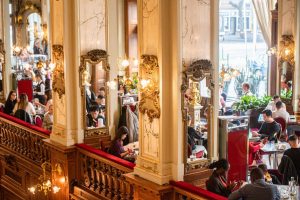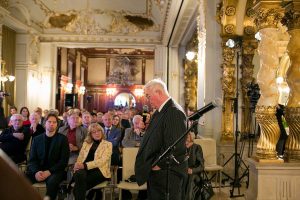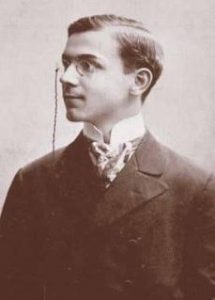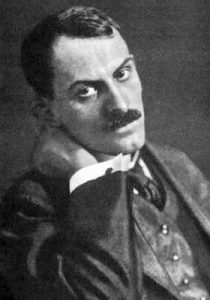
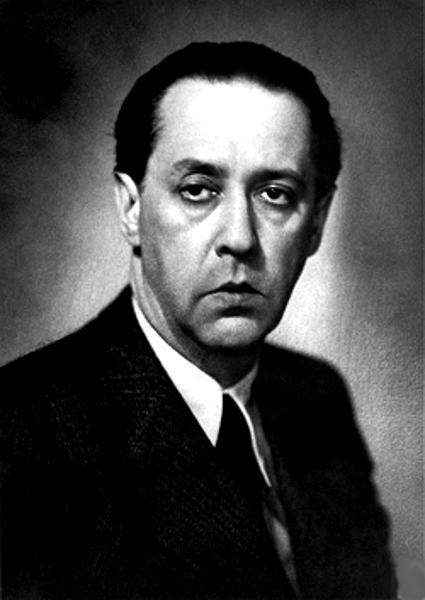
The cultural vibrancy characteristic of the New York Café acted as a magnet, drawing lovers and practitioners of the arts and literature, young and old alike. It was in this circle that the 18-year-old Sándor Márai made his debut in 1918, thanks to his mentor, Gyula Krúdy; under his name at the time, Sándor Grosschmid, he broadened the circle of rebellious young men of noble descent.
He moved to Budapest in 1914 because, although his parents had given him an elite middle-class upbringing and he had studied at the Premonstratensian Canons„ Kassai Secondary School in his hometown of Jászóvár, he found the strict rules there difficult to bear. At the age of 14, he ran away from home and was sent to a boarding school in Buda, the Archdiocesan Catholic Grammar School of Budapest’s 2nd District. He did not settle in there either, so he returned to Kassa, and in 1917 he took his school-leaving examination at the Catholic Secondary School in Eperjes.
His talent burst onto the scene at a very early age. His parents did not support his literary ambitions, and the Premonstratensians did not tolerate his defiant, bohemian style of dress; furthermore, they were opposed to pupils publishing their work independently. Nevertheless, even as a young man, he submitted entries to various daily newspapers under a pseudonym. It is said that he used a pen name so as not to bring shame upon the Grosschmid name by choosing an artistic career path.
In the autumn of 1918, he moved to Budapest. Although he studied law and later arts, his first collection of poems, *Emlékkönyv* (*Memorial Book*), was published that very year. The work also appealed to Dezső Kosztolányi, another ”New Yorker’, who praised Márai’s work in the *Pesti Napló*. In Pest, Márai led a bohemian, extravagant life, regularly frequenting nightspots and cabarets – and the New York Café. He met his mentor, Gyula Krúdy, there on several occasions.
It was Krúdy who coined the motto for the New York Café’s cultural programme series, the New York Művész Páholy, which reads:
„There is no literature without coffee houses”
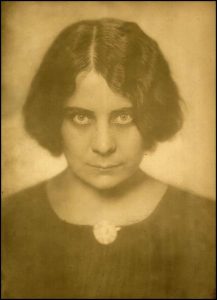
His youthful recklessness and bohemian lifestyle did not last long, as in 1923 he met his future wife, Ilona Matzner – known as Lola – to whom he remained a faithful companion for more than six decades, until her death.Constant wandering
Following the fall of the Soviet Republic, his family felt it would be safer for him to leave the country, so Márai continued his studies in Leipzig and then in Berlin, eventually becoming a regular contributor to several newspapers. During these years, Márai became a true citizen of the world: he travelled extensively, read widely and kept himself well-informed, drawing on these experiences for the themes of his writing. His talent was quickly recognised abroad, and so he published regularly not only in Germany but also in Prague and in the *Kassai Napló*. When the world-famous writer Thomas Mann visited Budapest in January 1935, Márai was one of those who showed the writer around Buda Castle. Until 1948, wherever he travelled in the world, he always returned to Budapest and Košice. That year, however, the Márai family took a major step: they left the country. They went first to Switzerland, then settled in Posillipo, Campania, in Italy. Their fate was followed by several newspapers published in the West, and an interview was also published in the Cleveland-based newspaper *Szabadság*. In it, he identified the two most important tasks of the exile as introducing Hungarians to the world without prejudice and preserving the Hungarian language. Márai and his wife finally left Italy in 1952 and moved to New York. It was then that he joined Radio Free Europe, creating a kind of intellectual bridge with his homeland he had left behind. He followed the events of 1956 closely throughout. He expressed his thoughts on those events via Radio Free Europe. Between 1967 and 1979, he lived in Italy, before moving back to the United States in 1980 and settling in San Diego. After the deaths of his younger brother and sister, as well as his son and wife, and whilst he himself was suffering from advanced cancer, he took his own life with a gunshot on 21 February 1989. His ashes were scattered into the Pacific Ocean. Márai was survived by three step-granddaughters: Lisa, Sarah and Jennifer Márai, who live in the United States. As they had not been taught Hungarian, they were never able to understand their grandfather’s life’s work.The fate of his works
Sándor Márai drew up his will back in 1967. He recorded on tape what was to happen to his manuscripts in the event of his death. In the recording, he asked Lola that, once the Russians had finally left the country and democratic elections had been held, she should contact the Hungarian Academy of Sciences and deposit the manuscripts with them until such time as – as his heir – she did not wish to dispose of them. From 1948 onwards, Communist cultural policy sought to consign Sándor Márai to oblivion. In the 1980s, attempts were made to coax him back, but he refused to play along and did not authorise the publication of his books. It was only after his death that his works began to be republished in Hungary. In 1990, a year after his death, he was posthumously awarded the Kossuth Prize. Abroad, he was first rediscovered in France in the early 1990s. Within a short space of time, four of his novels were published in Paris. His Italian publisher, having discovered his works in French translation, decided to launch his Márai series with the novel *The Candles Burn Down to the Stump*. *Le braci* quickly made it onto the Italian bestseller list. Since then, the novels – primarily those published by French publishers – have been released to huge success in German, Spanish, Portuguese and English-speaking countries, as well as in numerous Eastern European languages; more recently, his other works have also been published. Sándor Márai is currently enjoying a renaissance; his works are being adapted for the screen one after another, and his plays have been revived on the stage.„With my very last breath, I thank fate for allowing me to be human, and for the spark of reason that shone even in my dimmed soul. I saw the earth, the sky, the changing seasons.”.
I have come to know love, fragments of reality, desires and disappointments.
I lived on this earth and gradually came to my senses. One day I shall die: and how wonderfully natural and simple that is! Could anything else, anything better or more magnificent, have happened to me? It could not.
”I have experienced the fullest and most wonderful of all human destinies. Nothing else, nothing better, could have happened to me.’