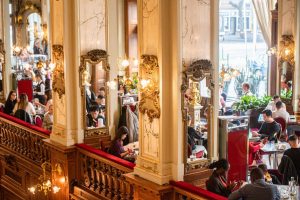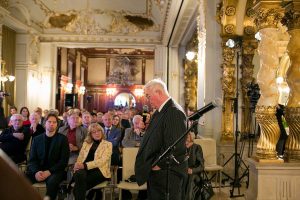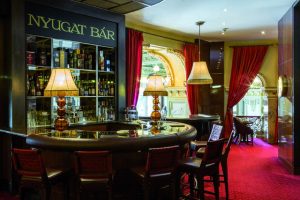
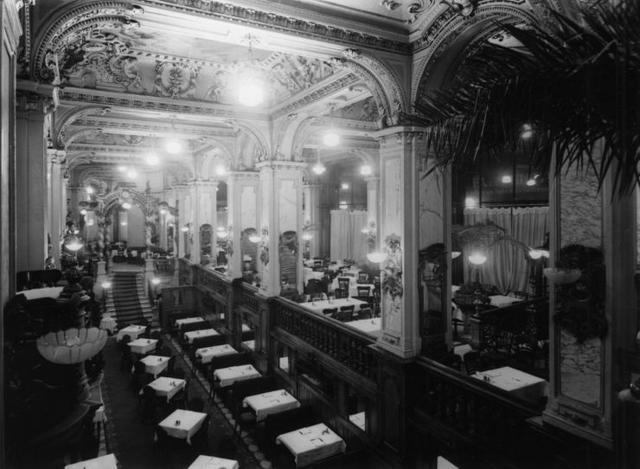
From the moment the New York Palace opened its doors, it attracted creative minds, be they journalists, painters or poets. Although the New York Palace was built as an insurance company headquarters, its café became an important melting pot for creative artists, whether rich or poor, but could always count on a hot coffee, a bite to eat and the company of like-minded intellectuals within the walls of this building, which opened on 23 October 1894 and offered every luxury. The New York Palace unwittingly evolved into a literary café.
This was where the editorial office of the *Pesti Napló* was based; this is where the staff of *Nyugat* used to gather; it was the critics„ regular haunt; and it was here that the Hungarian film and cinema industry first took shape. After theatre premieres, the stars of the profession would gather here. This place was home to the magazine *Nyugat*; it became the regular haunt of the *Pesti Napló* editorial team; it hosted the banquets following theatre premieres; and it was also home to the artists” ‘day centre’, the Nyeho.
The New York became a true literary café during the era of the Harsányi brothers, when a head waiter, Mr Gyula Reisz, became a confidant of the young writers. The head waiters practically pampered their writer friends, helping them with their work through all sorts of thoughtful little gestures. Alongside their coffee, they were served the so-called ‘dog’s tongue’ free of charge – that is, a small strip of paper on which countless poems, short stories, short stories, blotting paper to soak up the ink, dictionaries, address books, train timetables, and domestic and foreign newspapers. But they were also treated to a special menu for a few pengős – this was the ‘writer’s platter’ – and, on request, the writers, who were sometimes hungover, were given aspirin. They could also play billiards, and could even have their phone calls forwarded here, as each table was equipped with a telephone. The artists of the era – actors, directors, filmmakers, classical musicians and pop musicians – were happy to wait at their tables for the morning papers after a premiere or a night of revelry. Countless careers and downfalls began here.
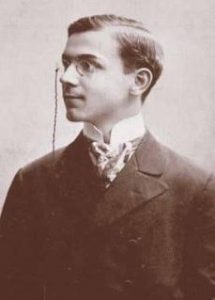
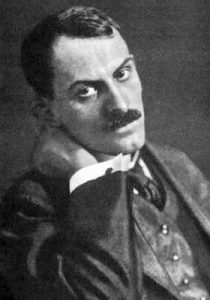
In this series, we present those iconic poets, writers, journalists and representatives of other artistic disciplines who have left their mark on the grand table of culture, and many of whom created their works here, within these time-honoured walls, or simply passed the time in good company:
FERENC MOLNÁR – THE WORLD-RENOWNED PLAYWRIGHT AND BON VIVANT
JENŐ HELTAI – WHO CONSIDERED THE NEW YORK CAFÉ HIS HOME
SÁNDOR MÁRAI – THE ETERNAL REBEL
GYULA KRÚDY – BETWEEN EXTREMES
The best known of these is El Asmodáj, a figure often referred to as the spirit of coffee and thought. His presence fits perfectly with the world of the New York Café: a place where spectacle, thought, literature and social life have been intertwined for over 130 years.
Damage and restoration
MIHÁLY BABITS A – A MAN WHO SLIPPED INTO THE SKIN OF A SERIOUS CRITIC
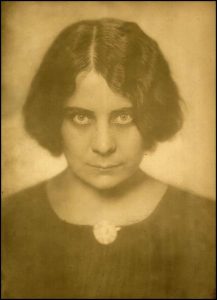
MARGIT KAFFKA – THE WRITER WHO FOUND HER OWN VOICE
FRIGYES KARINTHY – THE SATIRICAL GENIUS
ÁRPÁD TÓTH – THE POET OF SADNESS
DEZSŐ KOSZTOLÁNYI – THE PERPETUAL PRANKSTER