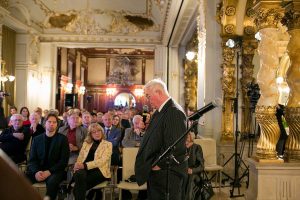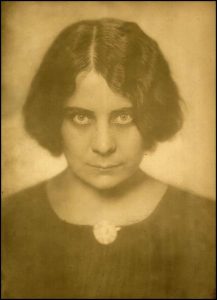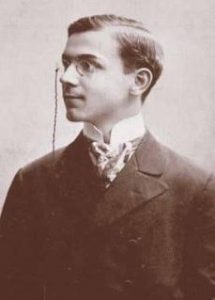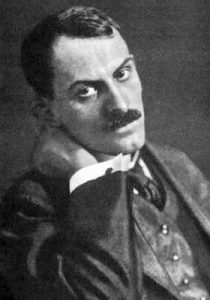
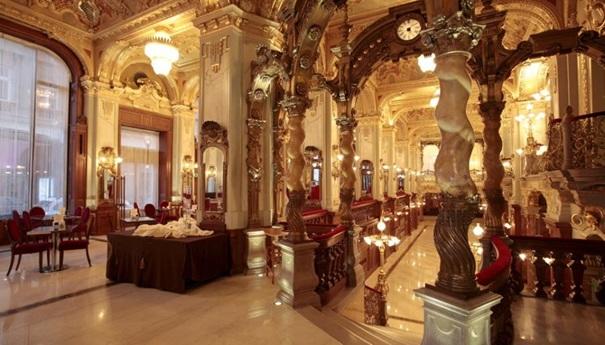
The works of many of our renowned poets and writers were created within the walls of this building, and we remain proud of them to this day! Here are a few quotations from the greats of our literature in which „New York” is mentioned! These lines prove that art, literature and the café have indeed been intertwined from the very beginning, and have always left a deep impression on those who love this place.
„There is no literature without a café!”
/Sándor Márai
„He worked in the so-called ”big room„ with six colleagues. The others disturbed him considerably. To ensure he had some peace and quiet, he made a cubicle out of a tarpaulin in one corner, but even there he couldn’t concentrate properly when writing a column or a feature, so he got into the habit of going over to the New York Café for this purpose and scribbling his articles up on the balcony. In those days, it was still possible to ask the waiter for a pen, ink and writing paper on credit – not to mention, in the case of the popular head waiter, small loans. (It is said that the New York stopped providing ink to writers after Karinthy accidentally knocked half a bottle onto a sofa. From then on, they could only get pencils from the waiter.)”
/Ferenc Molnár
„How do these incomprehensible, strange friendships between guests and waiters come about? How many such waiter-friends did I have, from Fernand in Paris to the wise Gyula at the Fiume café and the Otthon, to the immortal Gyula of the New York and Hungarian literature, to the cunning and strange little Ödön of the night-time entertainment venue! How much wisdom, kindness and tenderness I received from them, like sweet cream and a double helping of sugar thrown in for free with my black coffee! If only one could remember it all! I envy those writers who write their autobiographies. AND I’m amazed by their books… is that all? Is that all that happened to them? Just that, and nothing more? They don’t speak of those women who walked alongside them through life. And they make no mention of those waiters who witnessed their struggles and adventures, the birth of their poems, their loves, their misery and their glory! And I pity those who have never savoured the flavour of these mysterious friendships, and who, amidst the tips, failed to notice the human hand that could have been clasped.”
/Jenő Heltai
„– In New York? But there are so many illiterate people there now that Mr Harsányi and his family recently forbade the waiters from giving ink and pens to the writers.
– Yes, because Karinthy spilled ink all over the grey sofa.”
/Gyula Krúdy
„Whether man has free will, what shape the plague bacterium takes, what the wages are in England, how far away Sirius is, (…), whether homosexuality is legitimate, and whether Anatole France is Jewish. They wanted to get to the bottom of it all, quickly and thoroughly, because although they were all very young, barely in their twenties, they felt they didn’t have much time left.”
/Dezső Kosztolányi
“In lavish New York, they polished your shoes, ironed your clothes, shaved you late at night, and trimmed your hair and nails… The café was a workshop and a writing desk; in times of misfortune, it was also a flat and a place to sleep, for there was no need to leave it from dawn till dawn.”
/Jenő Heltai