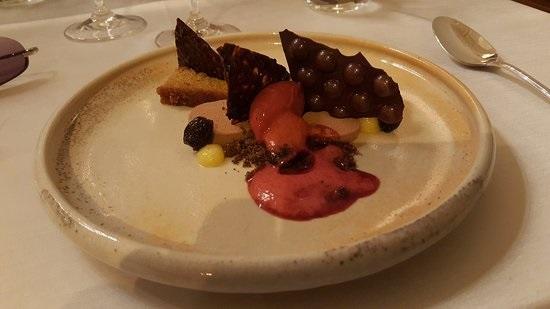
Goose liver has a very long history and has not lost any of its popularity over the millennia. It is considered a true delicacy – not only because of its unique flavour and texture, but also due to the exceptionally beneficial ingredients it contains. In Hungary, it is a ‘Hungaricum’, but it is, of course, also enjoyed in other parts of the world.
Fattening up with treats
Even the ancient Egyptians were involved in the production of foie gras; the Romans, for example, fed the animals a mixture of flour, milk and honey. Before the discovery of the Americas, and for quite some time afterwards, until maize became widely available, geese were fed other energy-rich feeds – or, if you like, force-fed – to ensure their livers grew large and fatty.
One of the best-known of these is the fig. This fruit is still often paired with foie gras dishes today. As figs do not grow everywhere, in more northerly countries apples appeared on the plate instead of figs, caramelised with sugar. Nowadays, only the imagination sets the limits for preparing foie gras, which is paired with a wide variety of fruits and flavours. Foie gras can be prepared using a wide range of techniques: it can be roasted, boiled, poached, grilled, or made into pâtés, mousses, or even ice cream.
After the discovery of America
The spread of maize fundamentally changed the way geese were fattened; in Hungary, for example, the production of fattened geese became a peasant tradition. The geese were taken to the fattening pens in autumn, kept in confined spaces and force-fed twice daily with corn soaked in water and salted. In this way, a single month was enough for the geese to become sufficiently fat. For the peasantry in the settlements of the Southern Great Plain, goose fattening was an important source of income.
The goose is now a Hungarian speciality
In 2013, the Hungarikum Committee included not only goose liver but also all products made from fattened geese in the Hungarikum Collection.
It’s not only tasty, but healthy too
As well as its distinctive flavour, liver has many other benefits; for example, it is an excellent source of vitamins. Vitamin A is abundant in goose and chicken liver, as well as in the livers of certain fish; vitamin B1 is found in pork liver; vitamin B6 is mainly found in chicken liver; vitamin C is found in veal and chicken liver; and vitamin E is also found in veal and chicken livers; furthermore, they contain plenty of folic acid, iron and zinc, and are also good sources of calcium and potassium.